Active bed bug infestations in Memphis spread quickly due to regional indoor humidity averages exceeding 60 percent during warm months, which supports faster reproductive cycles for *Cimex lectularius*. The U.S.…
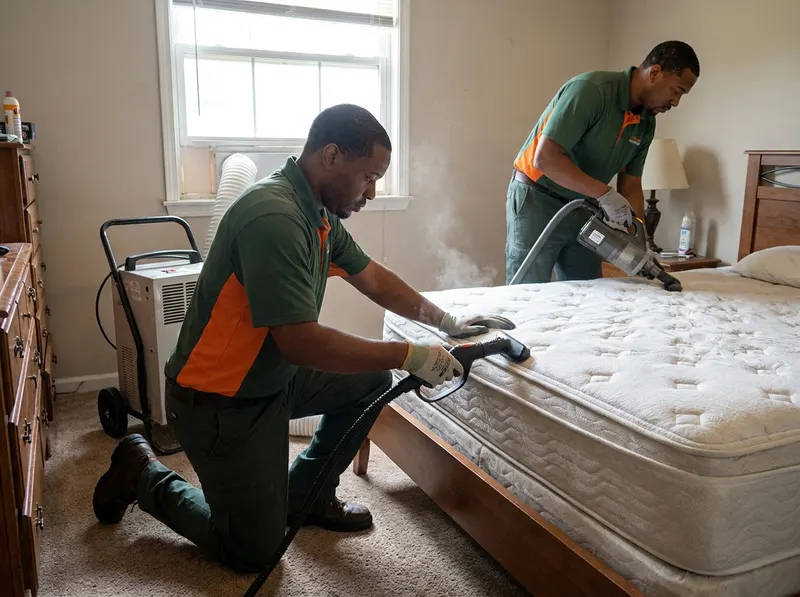
Active bed bug infestations in Memphis spread quickly due to regional indoor humidity averages exceeding 60 percent during warm months, which supports faster reproductive cycles for *Cimex lectularius*. The U.S. Environmental Protection Agency classifies bed bugs as public health pests, noting that control requires comprehensive integrated pest management rather than superficial store-bought aerosols. Over-the-counter pyrethroid sprays routinely fail because urban populations demonstrate documented biochemical resistance, often driving breeding pairs deeper into baseboards, plaster lath, and adjoining multi-family drywall cavities. ForestQuill Exterminators handles infestations by treating harborages directly, mapping aggregation points using high-lumen inspection tools, and identifying whether structural heat remediation or targeted chemical applications match the building construction.
Treatment selection depends on architectural factors and occupancy parameters. For historic properties in Midtown, Cooper-Young, and Central Gardens, older lath-and-plaster walls and narrow floorboard seams frequently benefit from high-output structural thermal systems monitored via thermocouple sensors. According to guidelines from the Pest Control Technology trade technical standards, maintaining internal surface temperatures between 120°F and 140°F lethally desiccates adult bugs, nymphs, and embryonic eggs within three hours. Conversely, modern drywalled residences in East Memphis, Cordova, and Southwind with localized room contamination are effectively remediated using targeted residual contact formulas paired with insect growth regulators evaluated by the National Pesticide Information Center. The trade-off centers on preparation and structural footprint: whole-room heat requires moving heat-sensitive electronics and melting risks out of the perimeter, whereas liquid residual protocols require a strict two-to-three-week biological hatching window between visits to interrupt secondary nymph emergence.
Property structures in Downtown Memphis, Binghampton, Berclair, and Hickory Hill present distinct environmental vectors, ranging from historic high-rise vertical conduit chases to dense crawlspace foundations near Overton Park. The Centers for Disease Control and Prevention emphasizes that bed bugs do not transmit infectious pathogens, yet secondary cutaneous complications from chronic bites disrupt healthy sleep cycles. ForestQuill Exterminators operates strictly under structural pest standards established by the Tennessee Department of Agriculture, applying low-odor products approved for sensitive domestic environments to ensure child and pet safety once treated surfaces completely dry. Commercial and residential occupants receive clear preparation guidelines aligned with the National Pest Management Association, ensuring that clothing, bedding, and soft goods are laundered at water temperatures above 120°F as specified by the California Health Care Foundation housing sanitation metrics to eliminate re-introduction risks.
Execution follows a disciplined four-stage remediation cycle: 1. Technicians conduct a physical diagnostic search of all sleep zones and adjacent seating, inspecting frame joints, electrical faceplates, and carpet tack strips under standards outlined by the Purdue University Department of Entomology. 2. Infested textiles are isolated in sealed poly containment bags, and high-efficiency HEPA extraction removes aggregate live clusters, molted exuviae, and frass without dispersing airborne allergens. 3. Application teams deploy either thermal heat circulation units verified by National Institute of Standards and Technology heat-transfer criteria or microencapsulated residuals alongside desiccant dusts into structural voids. 4. Protective laboratory-tested mattress encasements meeting ASTM International textile puncture standards are installed to quarantine remaining substrates, followed by a formal 14-to-21-day verification audit.
Every job gets a firm, written price after a free on-site visit.
Tell us about your bed bug remediation job in Memphis and we'll send a clear, written quote, usually the same day.
 ForestQuill Exterminators